

Gray Fox
Urocyon cinereoargenteus
Natural Habitat
Deciduous forests, brushy woodlands, and rocky terrain. They prefer areas with dense cover.
Where I'm Found
Found throughout North and Central America. Their range extends from southern Canada, down through the entire United States and Mexico, reaching as far south as Venezuela and Colombia.
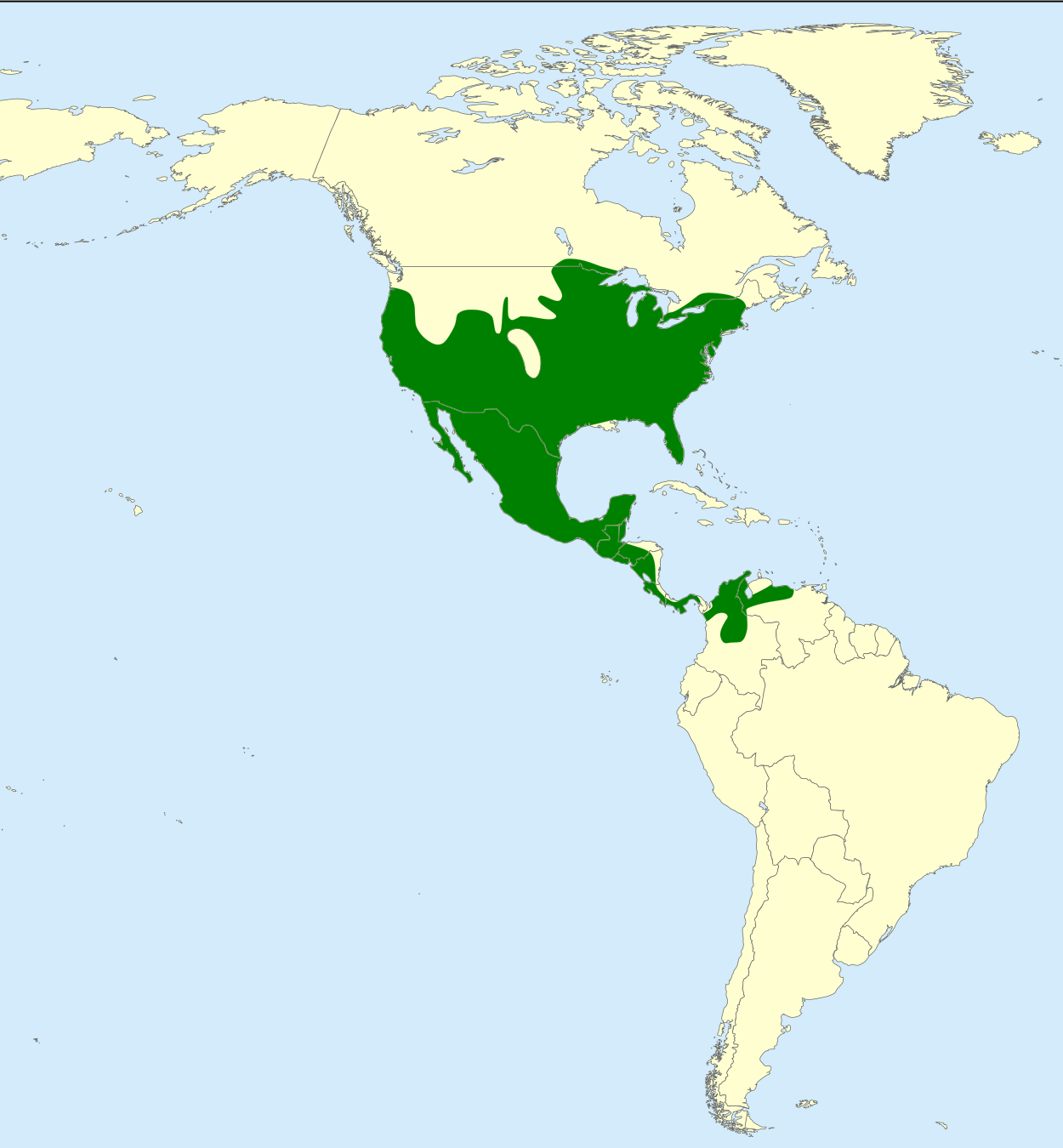
Source: Cephas / IUCN (CC BY-SA 4.0)
What I Eat
Omnivorous and opportunistic hunters.
- Wild: Rabbits, voles, birds, insects, fruit, and corn.
- Zoo: Commercial canine diet, raw meat, fruits, and vegetables.
How Long I Live
- Wild: 6 – 8 years
- Captivity: 10 – 12 years
Fun Facts
- Tree Climbers: The only American canid capable of climbing trees, using their semi-retractable claws to escape predators or reach food.
- Ancient Lineage: They are evolutionarily distinct from the Red Fox and are considered one of the most primitive living canids.
- Crepuscular: They are most active during the twilight hours of dawn and dusk.
- Delaware’s State Wildlife Animal: The gray fox is Delaware’s official State Wildlife Animal (29 Del.C. § 323), adopted June 10, 2010 by House Bill 354, after fourth-grade students at Joseph M. McVey Elementary School in Newark (teacher Paul Sedacca) proposed it and wrote to legislators — noting it is native to Delaware, the only canid that can climb trees, can run up to 28 mph, and, because it does not hibernate, is “always ready like our soldiers at Dover Air Force Base.”
Photos & Videos
Real photos and videos of Gray Fox at 3 Palms Zoo — tap any photo to see it up close.


Meet More Magnificent Mammals
›


